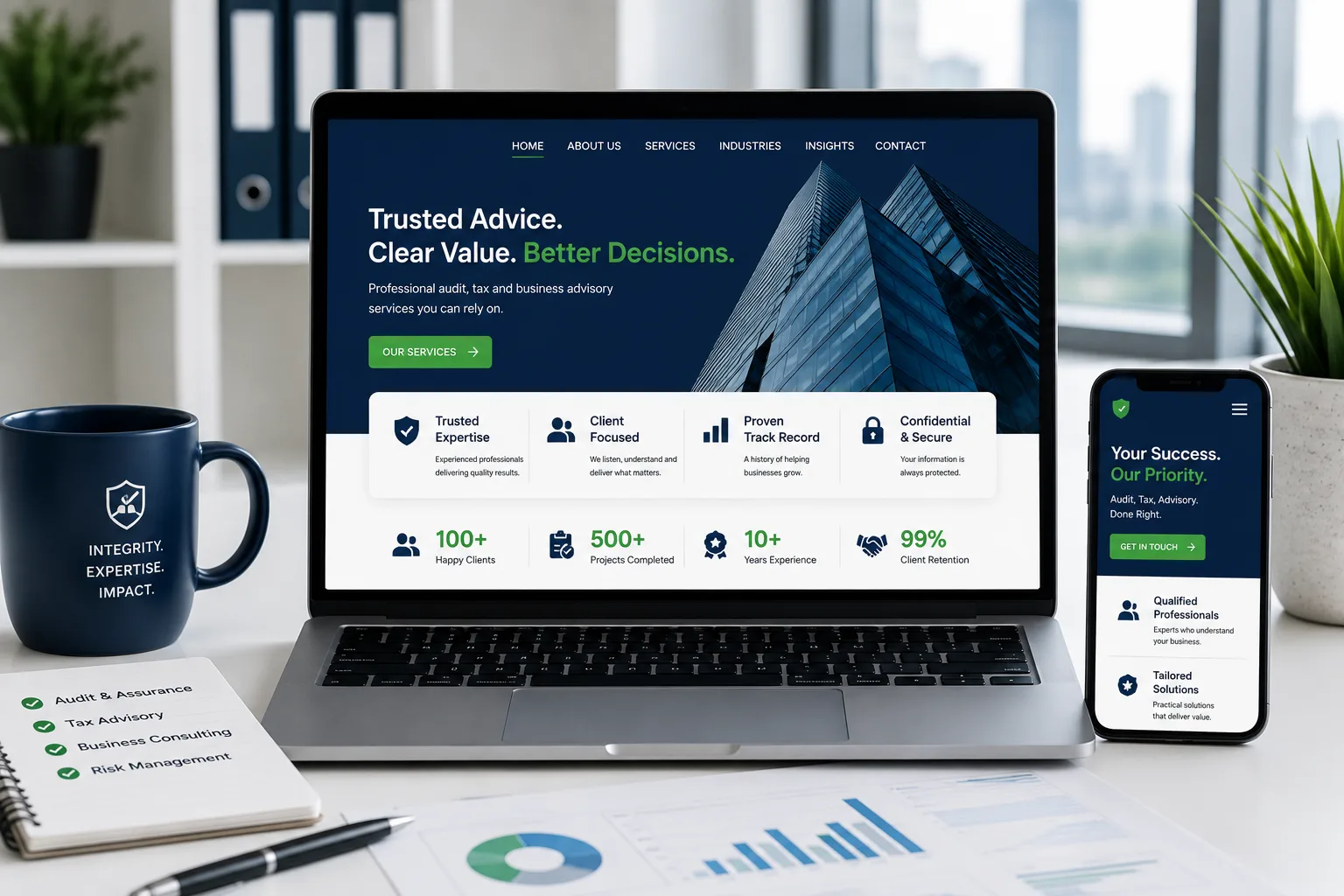
Before a business ever calls an audit firm or a consultancy, they check it out online first. Unlike a restaurant or a retail store, where a customer can walk in and get an immediate feel for the place, professional services firms are judged almost entirely on indirect signals — and for most prospective clients today, the website is the very first one.
For auditors, accountants, and consultants, that first impression carries unusual weight. You're asking clients to trust you with their financial records, tax compliance, and sensitive business information — often before you've ever spoken to them. A weak or generic website undermines that trust before a conversation even starts.
Why Trust Matters More for Professional Services
Unlike many other purchases, hiring an audit firm or consultant is a high-trust, high-stakes decision. Clients are evaluating:
- Whether you're competent enough to get their compliance right
- Whether you're established and stable enough to rely on long-term
- Whether you'll handle confidential financial information with discretion
- Whether you actually understand their specific industry or business size
A website is one of the few tools available to answer all of these questions before a client ever picks up the phone — which is exactly why a generic, template-feeling site does real damage, even if the firm behind it is excellent.
What Builds Instant Trust on a Professional Services Website
1. Clear Credentials and Qualifications
Displaying professional certifications (CPA, ACCA, relevant regulatory memberships), years of experience, and areas of specialization immediately signals legitimacy. Vague, generic claims ("we offer expert services") do far less work than specific, verifiable credentials.
2. Real Team Profiles
Prospective clients want to know who they'd actually be working with. Named team members, with photos, qualifications, and brief bios, humanize the firm and build far more confidence than an anonymous "Our Team" page with stock photography.
3. Clearly Explained Services
Auditing, tax compliance, bookkeeping, and consultancy can mean different things to different clients. Dedicated, well-explained service pages — rather than a single vague paragraph — help potential clients quickly self-identify what they need and see that the firm genuinely understands it.
4. Published Insights and Thought Leadership
A regularly updated blog covering practical, relevant topics (tax deadlines, compliance checklists, regulatory changes) does double duty: it demonstrates real expertise, and it gives search engines fresh, relevant content to rank — meaning the right potential clients find the firm exactly when they're searching for answers.
5. Easy, Direct Contact Options
High-trust decisions often still end with a phone call or a scheduled consultation. Prominent contact details, a simple quote or consultation request form, and clear next steps remove friction at the exact moment a hesitant visitor decides to reach out.
6. Fast, Professional, Mobile-Friendly Design
A slow, dated, or poorly-functioning website undercuts every credibility signal above. If the digital presence looks neglected, it raises an uncomfortable question for a prospective client: if they're not investing in this, what else might they be cutting corners on?
A Real Example: Juma Auditors
Juma Auditors & Co Consultants, a Nairobi-based audit firm offering auditing, accounting, tax, and business consultancy services, needed a website that reflected the credibility of an established firm rather than a generic template. Working with Blessedave Technologies, the site was built around exactly the trust-building principles above: clearly presented service pages covering auditing, bookkeeping, business consultancy, taxation, and corporate training, named team member profiles with real credentials, and a regularly published insights section covering practical topics like KRA filing requirements, statutory audits, and PAYE compliance — content that builds authority while also helping the firm show up in relevant searches.
You can see the full case study in our projects portfolio, and browse our dedicated Auditors & Consultants industry page to see how we approach this sector specifically.
What Happens Without These Trust Signals
Firms that skip this and rely on a bare-bones or outdated website often find themselves losing potential clients who never even reach out — not because the firm isn't capable, but because nothing on the site gave them a reason to believe it. In professional services, where the entire relationship is built on trust, that's an expensive gap to leave unaddressed.
Build a Website That Earns Trust Before the First Call
At Blessedave Technologies, we specialize in building websites for auditors, consultants, and other professional services firms — designed specifically to establish credibility, showcase expertise, and convert cautious, high-stakes visitors into scheduled consultations.
Explore our work for Auditors & Consultants, or request a quote for your firm at blessedavetechnologies.com.