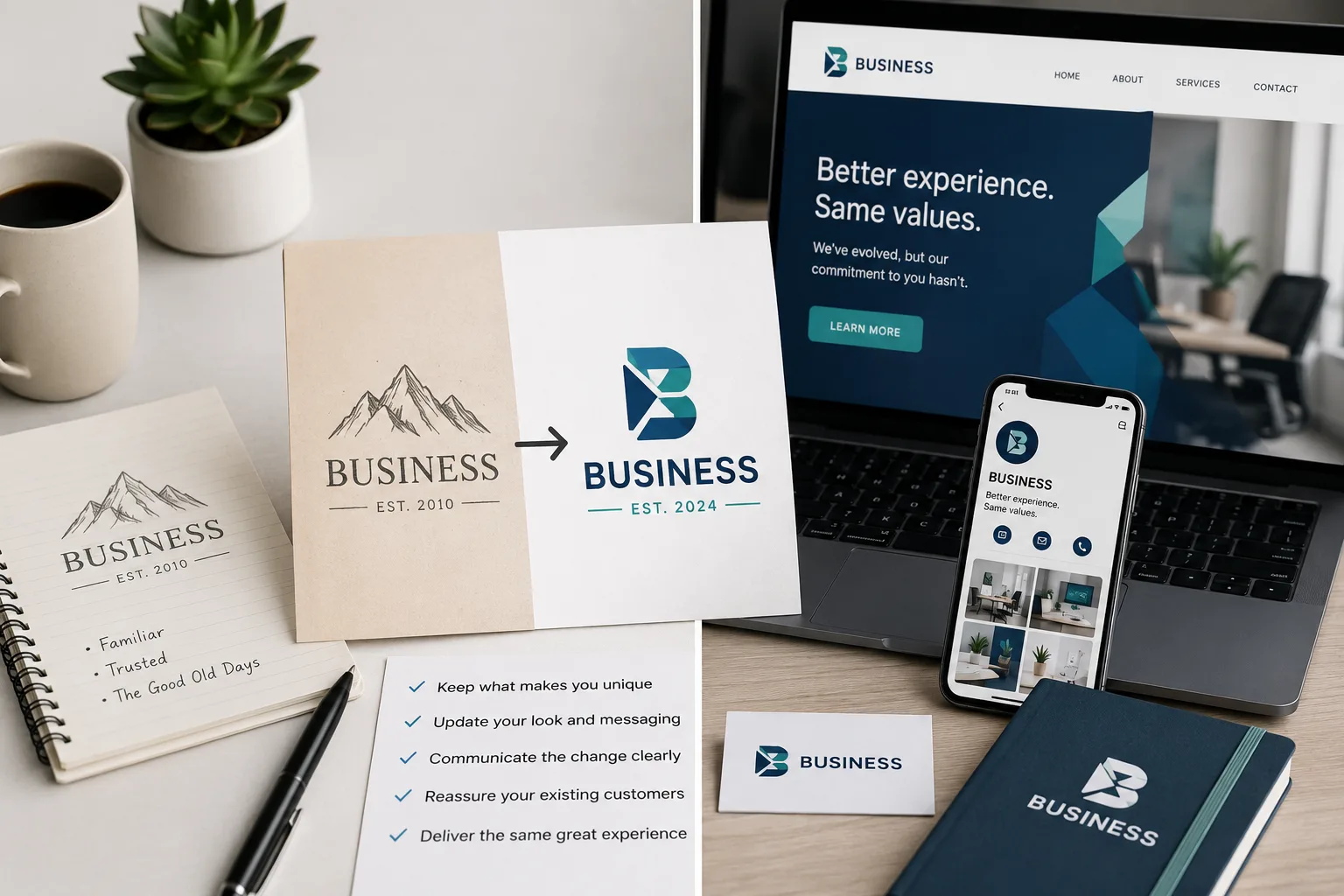
Rebranding is often necessary — a business outgrows its original look, pivots its offering, or simply needs to modernize a dated identity. But rebranding also carries real risk: existing customers built trust and recognition around your old identity, and a poorly handled transition can genuinely confuse or alienate them, even when the new brand is objectively better.
The good news is that this risk is very manageable with the right approach. Here's how to rebrand thoughtfully, without losing the customer base you've worked hard to build.
Why Rebrands Go Wrong
Most damaging rebrand missteps come down to a few recurring patterns:
- No communication — customers simply encounter the new brand with no context, leaving them confused about whether it's the same business
- Too much change at once — altering the name, logo, colors, and tone simultaneously makes the connection to the old brand hard to recognize
- No transition period — an abrupt switch, rather than a gradual, signposted shift, gives customers no time to adjust
- Losing what customers actually valued — changing surface elements while inadvertently signaling a shift in quality, values, or focus that customers didn't ask for
A Practical Rebranding Approach
1. Get Clear on Why You're Rebranding
Before any design work begins, define the actual reason: outgrowing a dated look, a business pivot, a merger, or correcting a brand that no longer reflects your quality or positioning. This clarity shapes how dramatic the change needs to be — and how much you'll need to explain to existing customers.
2. Decide How Much Actually Needs to Change
Not every rebrand requires starting from zero. Consider:
- A refresh — updated colors, typography, or a modernized logo variant, while keeping the core brand recognizable
- A moderate rebrand — a new logo and visual identity, but the same business name and positioning
- A full rebrand — new name, new identity, and potentially new positioning entirely, typically reserved for major pivots, mergers, or escaping serious reputational baggage
A full rebrand carries significantly more risk of losing existing customer recognition than a refresh or moderate rebrand — match the scale of change to the actual underlying reason for rebranding.
3. Communicate Before the Change, Not After
Give existing customers advance notice through email, social media, and in-store or website signage, explaining what's changing and — just as importantly — what isn't. Customers who understand why a change is happening, and are reassured the core business and quality remain the same, adapt far more smoothly than those who simply stumble onto a new look with no explanation.
4. Maintain Consistent Core Elements Where Possible
If your business name isn't changing, keep it prominent and unchanged through the transition. If certain brand colors or symbols have strong recognition value, consider carrying an element of them forward in some form, even within a broader visual refresh — this gives long-time customers a visual thread connecting old and new.
5. Roll Out Gradually Where Practical
Rather than an instant, total switch, a phased rollout — updating your website first, then signage, then packaging or print materials over subsequent weeks — gives customers a gradual, less jarring transition, and gives you room to catch and fix issues before they're visible everywhere at once.
6. Update Everywhere, Consistently, Once You Commit
Once the transition begins, move decisively across all platforms — website, social media, business cards, signage, invoices — since a prolonged period of mismatched old-and-new branding across different channels creates more confusion than either a clean old brand or a clean new one. Consistency across print and digital matters just as much during a rebrand as it does day-to-day, a principle we cover further in our guide on consistent branding across print and digital.
7. Address Existing Reviews, Listings, and Directories
Update your Google Business Profile, social media handles, and any third-party directory listings promptly, and where possible, note the rebrand directly in these listings so customers searching for your old brand name can still find and recognize you.
8. Give Customers a Clear Point of Contact for Questions
Some customers will have questions or concerns during a transition — a clearly available contact channel (a dedicated FAQ page, a visible customer service contact) helps address confusion quickly rather than letting it fester into complaints or lost trust.
What to Preserve, Even in a Major Rebrand
- The quality and experience customers already trust — a rebrand should signal evolution, not a break from what made the business valuable in the first place
- Any distinctive brand element with strong recognition — a particular color, symbol, or tagline, even reinterpreted, can serve as a bridge between old and new
- Your existing customer relationships — proactively reaching out to loyal or repeat customers directly, rather than letting them discover the change passively, shows respect for the relationship
Measuring Whether the Rebrand Is Working
After launch, keep an eye on:
- Customer feedback and direct questions or confusion reported through support channels
- Whether repeat customers continue engaging at a similar rate
- Search visibility and traffic, to confirm customers can still find you under the new identity
- Social media engagement, to gauge whether the new brand is resonating rather than causing disengagement
Rebrand With a Partner Who Manages the Full Transition
At Blessedave Technologies, we help Kenyan businesses plan and execute rebrands — from brand identity design through to updating your website, social platforms, and business listings — with a coordinated rollout that protects the customer trust you've already built.
Talk to us about planning your rebrand at blessedavetechnologies.com.