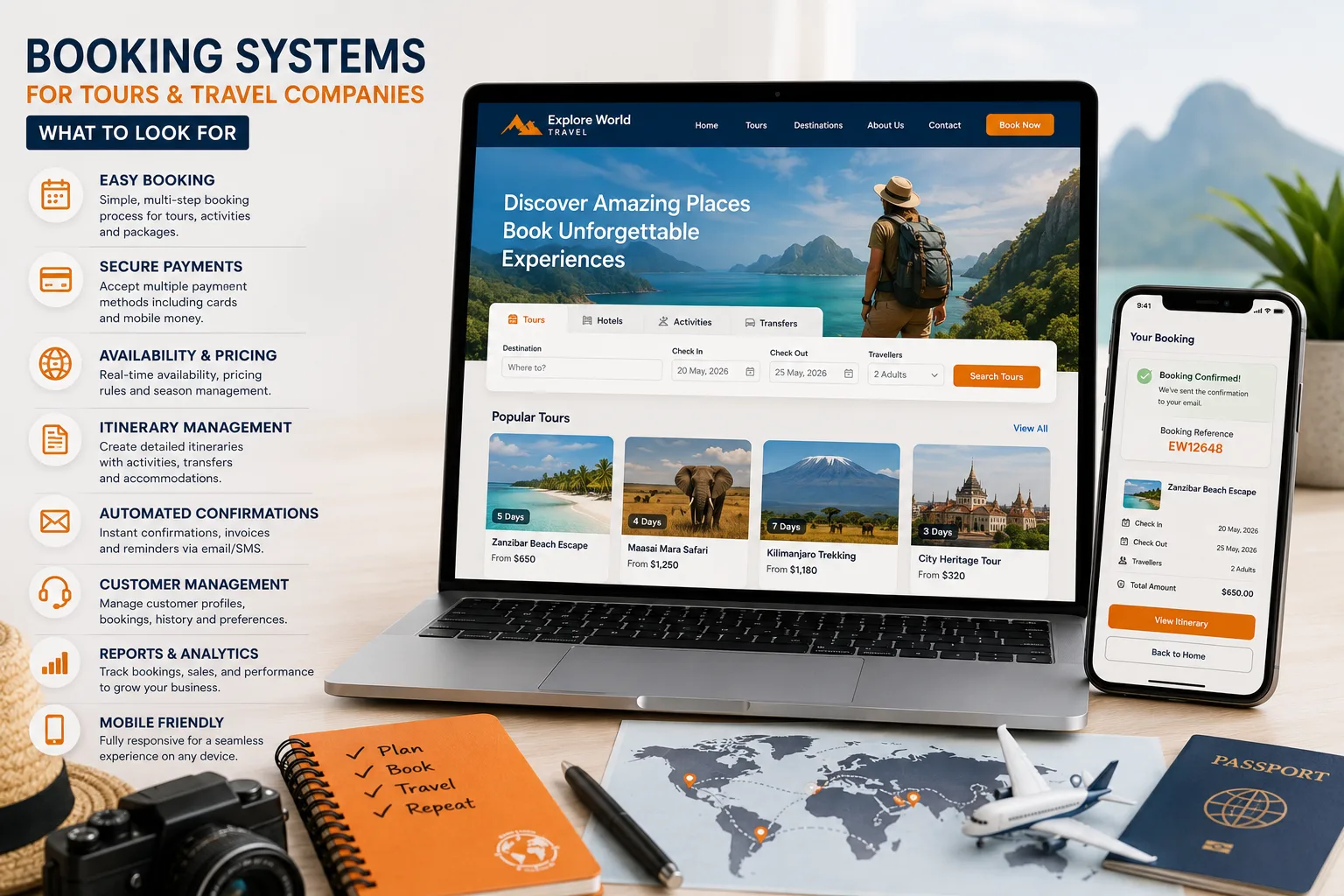
For tour and travel companies, managing bookings through phone calls, WhatsApp messages, and manual spreadsheets works fine — until it doesn't. Double bookings, lost inquiries, and hours spent manually confirming availability aren't just frustrating; they cost real revenue, especially during peak booking seasons when responsiveness matters most.
A proper booking system solves this by centralizing availability, payments, and communication in one place. Here's what to actually look for when choosing or building one.
Why Manual Booking Management Breaks Down
As a tour company grows, manual processes hit real limits:
- Double bookings happen when availability isn't tracked centrally across phone, WhatsApp, email, and walk-in inquiries
- Slow response times lose bookings to competitors who reply faster, especially with international travelers researching in different time zones
- Manual payment tracking creates errors and makes it hard to reconcile deposits against balances
- No visibility into demand patterns makes it difficult to plan staffing, vehicles, or guides around actual booking trends
A dedicated booking system addresses all of these by giving both the business and the customer a single, reliable source of truth.
Key Features to Look For
1. Real-Time Availability Management
The core function of any booking system: showing accurate, up-to-date availability across all your tours, packages, or accommodations, and automatically blocking dates once booked — eliminating the double-booking risk that manual tracking creates.
2. Online Payment Integration, Including M-Pesa
For Kenyan customers, M-Pesa integration is essential — allowing instant deposit or full payment at the point of booking rather than relying on separate, manual payment confirmation. For international travelers, card payment support (via a payment aggregator) is equally important, since many won't have access to M-Pesa.
3. Customizable Packages and Pricing
Tour companies often offer variable pricing — group discounts, seasonal rates, add-ons like transport or equipment rental. A good booking system should handle this flexibility without requiring a developer to make changes every time pricing shifts.
4. Automated Confirmations and Reminders
Once a booking is made, automated email or SMS confirmations reduce back-and-forth communication, while automated reminders ahead of the tour date reduce no-shows and last-minute cancellations.
5. Multi-Language Support (If You Serve International Travelers)
If a meaningful share of your customers are international, offering the booking process in multiple languages removes friction that might otherwise cause a hesitant visitor to abandon the booking.
6. Mobile-Friendly Booking Flow
Many travelers research and book trips from their phones, often while comparing multiple options. A booking flow that's clunky or difficult on mobile will lose bookings to competitors with a smoother mobile experience.
7. Group and Multi-Traveler Booking Support
Family trips, corporate retreats, and group tours require booking systems that can handle multiple travelers, varying ages (for pricing), and sometimes different pickup points or preferences within a single booking.
8. Integration with Your Website and Marketing
The booking system should feel like a natural part of your website, not a separate, disconnected tool customers get redirected to. Well-integrated systems also make it easier to track which marketing channels are actually driving bookings.
9. Reporting and Analytics
Visibility into booking trends, popular packages, peak seasons, and revenue helps with planning — staffing, vehicle allocation, marketing spend — in a way manual tracking simply can't provide at scale.
10. Reliable Customer Support and Uptime
Since bookings can happen at any time, a system with poor reliability or downtime during peak periods can directly cost sales. This matters as much for off-the-shelf platforms as it does for custom-built systems.
Off-the-Shelf vs Custom Booking Systems
Generic booking platforms can work well for smaller tour operators with fairly standard offerings and tighter budgets. But companies with more complex packages — multi-day safaris with variable itineraries, group logistics, or specific local payment and communication needs — often get more long-term value from a custom-built system designed around exactly how they operate. This mirrors the broader decision most Kenyan SMEs face, covered in our guide on off-the-shelf vs custom software for Kenyan SMEs.
A Realistic Implementation Approach
Rather than building every feature at once, most tour companies benefit from a phased approach:
- Start with core availability and M-Pesa payment integration
- Add automated confirmations and reminders
- Layer in group booking support and package customization
- Add reporting and analytics once booking volume justifies the insights
This keeps initial investment manageable while ensuring the highest-impact features — availability and payment — are solved first.
Build a Booking System That Actually Converts Inquiries
At Blessedave Technologies, we build booking systems for Kenyan tour and travel companies with real-time availability, M-Pesa and card payment integration, and the flexibility to handle group bookings, custom packages, and seasonal pricing — designed around how your business actually operates.
Talk to us about a booking system for your tour company at blessedavetechnologies.com.